Confused Between Petrol, Diesel and Electric? The Best Car Engine for India After 2026 Explained
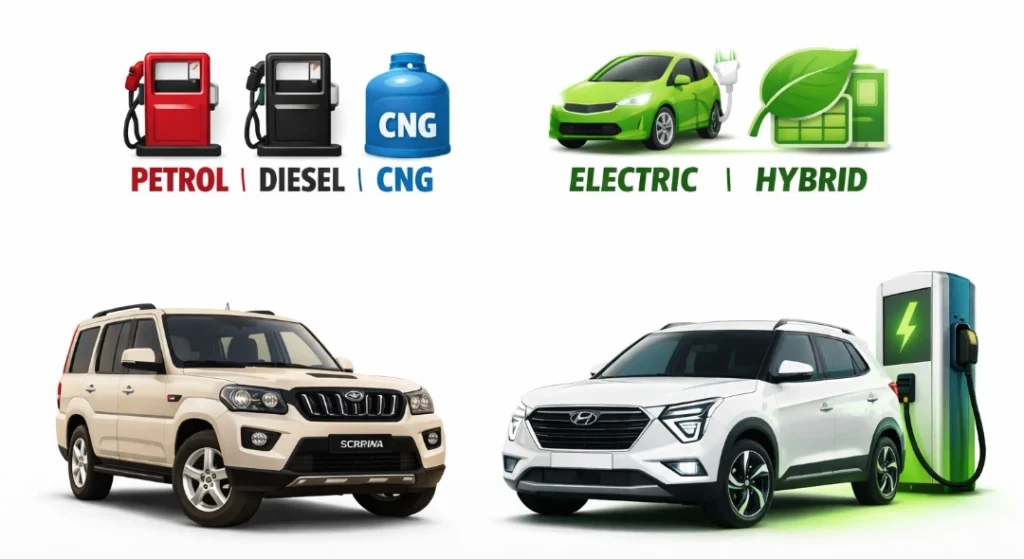
Buying a new car in India is no longer a simple decision. Earlier, the choice was mostly between petrol and diesel, but today buyers are confused between CNG, hybrid and electric vehicles (EVs) as well. Rising fuel prices, government regulations, and changing driving habits have made this decision even more complex.
If you are planning to buy a car in 2026 or later, this guide will help you understand which car engine type makes the most sense for you, based on real Indian conditions, not just brand claims.
Why Choosing the Right Engine Matters More Than Ever
A car is not just a purchase — it’s a long-term commitment. The wrong engine choice can lead to:
- High running costs
- Poor resale value
- Restrictions due to future emission rules
- Daily inconvenience in real-life usage
That’s why instead of asking “Which engine is best?”, the better question is:
“Which engine is best for my usage in the next 8–10 years?”
Petrol Cars – Still Relevant but Slowly Losing Ground
Petrol cars remain the most popular choice among Indian buyers, especially in cities.
Pros:
- Lower upfront cost compared to diesel and hybrid
- Smooth and silent driving experience
- Ideal for low to moderate usage
- Easy maintenance and wide service network
Cons:
- Petrol prices are unpredictable
- Not suitable for heavy daily running
- Lower mileage compared to diesel and CNG
Best for:
If your monthly driving is under 1,000 km, petrol cars will still make sense even after 2026. However, they may not be the most economical option in the long run.
Diesel Cars – Powerful but Facing an Uncertain Future
Diesel engines are known for strong torque and long-distance efficiency, but their future in India is slowly shrinking.
Pros:
- Excellent mileage on highways
- Better performance for heavy vehicles and SUVs
- Long engine life
Cons:
- Higher initial price
- Expensive maintenance
- Strict emission norms in many cities
- Possible resale issues in the future
Best for:
Diesel still works for highway drivers and people with very high monthly usage, but for city buyers, it may not be a future-proof choice after 2026.
CNG Cars – Budget-Friendly but Limited
CNG has become extremely popular among middle-class families looking for low running cost cars.
Pros:
- Very low fuel cost
- Cleaner than petrol and diesel
- Ideal for city driving
Cons:
- Limited boot space
- Lower power output
- Not available everywhere
- Long waiting periods for factory-fitted CNG
Best for:
If you mostly drive inside the city and want minimum fuel expenses, CNG cars are still one of the smartest choices for the next few years.
Hybrid Cars – The Most Practical Future Option?
Hybrid cars combine a petrol engine with an electric motor, offering the best of both worlds.
Pros:
- Excellent real-world mileage
- No charging anxiety
- Smooth city driving
- Environment-friendly without lifestyle changes
Cons:
- Higher initial cost
- Limited model options in India
Best for:
For buyers who want future safety, good mileage, and zero charging tension, hybrids may become the most balanced option after 2026, especially for urban and semi-urban users.
Electric Cars (EVs) – The Future, But Not for Everyone (Yet)
Electric vehicles are growing fast, but they are not a perfect solution for all Indians right now.
Pros:
- Extremely low running cost
- Silent and smooth drive
- Zero tailpipe emissions
- Low maintenance
Cons:
- Charging infrastructure still developing
- Long charging time
- Battery replacement cost
- Not ideal for frequent long trips
Best for:
If you have home charging, fixed daily routes, and mostly city usage, EVs can be a great long-term investment. However, they still require careful planning.
So, Which Engine Will Be Best After 2026?
There is no single best engine for everyone. The right choice depends on how you use your car.
- Low usage, short trips: Petrol
- Daily city commute, budget focus: CNG
- Balanced city + highway use: Hybrid
- Eco-friendly city driving with charging access: Electric
- Very high highway usage: Diesel (with caution)
Instead of following trends, focus on your driving pattern, budget, and long-term comfort.
Final Conclusion – Think Practical, Not Emotional
The Indian car market is changing fast. Fuel prices, government rules, and technology will continue to evolve. The smartest car buyers after 2026 will be those who choose an engine based on real-life usability, not marketing hype.
Hybrid and CNG cars are likely to grow the most, while petrol will slowly decline. Electric vehicles will rise steadily, but adoption will depend heavily on charging infrastructure. Diesel, while still powerful, may become a niche option.
Take your time, calculate your running cost, and choose an engine that fits your lifestyle — not just today, but for the next decade.
Frequently Asked Questions (FAQ)
Q1. Which car engine is best for the future in India?
Hybrid and electric engines are considered the most future-ready, but the best option depends on your daily usage and charging availability.
Q2. Will petrol cars be banned in India after 2026?
No, petrol cars will not be banned. However, stricter emission norms may reduce their popularity over time.
Q3. Is it safe to buy a diesel car now?
Diesel cars are still safe for high-usage buyers, but city restrictions and resale value should be considered carefully.
Q4. Are electric cars cheaper in the long run?
Yes, EVs have very low running and maintenance costs, but the initial price and charging setup matter a lot.
Q5. Should I wait for better technology before buying a car?
If you urgently need a car, buy based on current needs. Technology will always keep improving, so waiting forever is not practical.
Thank you for Being Here ♥️