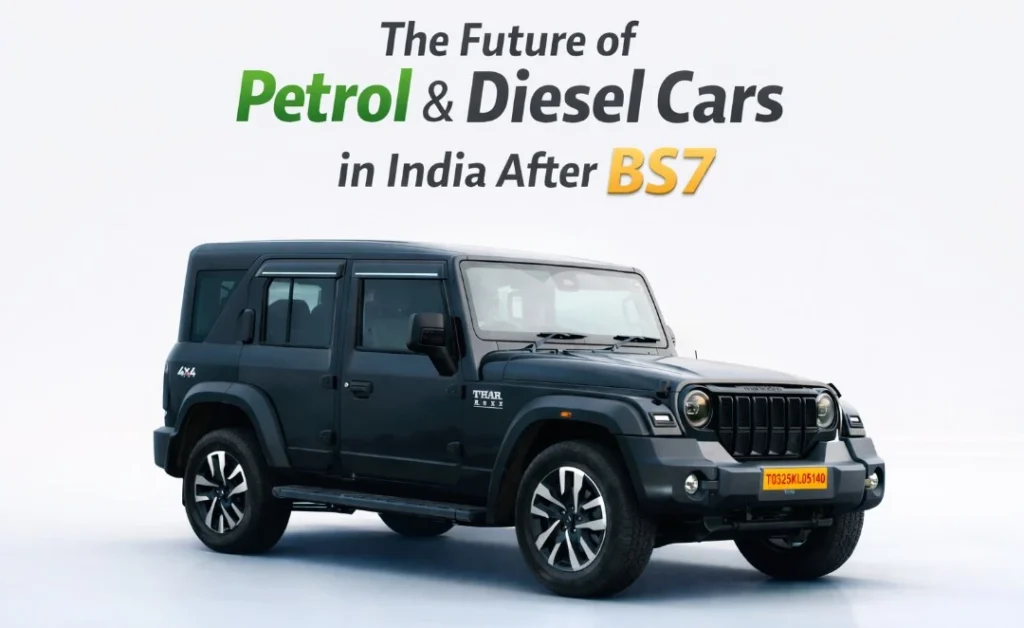
BS7 Emission Norms Explained: The Future of Petrol & Diesel Cars in India
Introduction: Why BS7 Emission Norms Matter More Than You Think
India’s automobile market is once again standing at a critical crossroads. After BS4 and the big jump to BS6, conversations around BS7 emission norms have already started creating confusion—especially for buyers planning to purchase petrol or diesel cars in the coming years.
Almost every car buyer today is asking the same questions:
- Will petrol cars survive after BS7?
- Is buying a diesel car risky now?
- Will my existing BS6 car become illegal?
- Should I shift to hybrids or EVs instead?
The reality is this: BS7 is not just about reducing pollution. It will impact car prices, engine technology, fuel quality, maintenance costs, ownership experience, and even resale value.
In this detailed, easy-to-understand guide, we’ll explain BS7 emission norms in simple English language-so you can clearly understand what’s coming and how it affects you as an Indian car buyer.
What Are Emission Norms in India?
Emission norms are government regulations that limit how much pollution vehicles are allowed to release into the air. These rules focus on controlling harmful gases such as:
- Nitrogen Oxides (NOx)
- Carbon Monoxide (CO)
- Hydrocarbons (HC)
- Particulate Matter (PM)
India follows Bharat Stage (BS) emission standards, which are largely aligned with European emission regulations.
Emission Norms Timeline in India
- BS4 – Valid until 2020
- BS6 – Introduced directly in 2020 (BS5 was skipped)
- BS7 – Expected around 2027–2028 (subject to official government notification)
What Exactly Is BS7 Emission Norm?
BS7 will be the next-generation pollution control standard for vehicles sold in India. It is expected to closely follow Euro 7–level regulations, which means:
- Even lower emission limits
- Strict Real Driving Emission (RDE) testing
- Continuous monitoring of emissions throughout a vehicle’s life
- More advanced onboard diagnostic systems
In Simple Words
Under BS7, cars won’t just be tested in laboratories. They’ll be tested in real Indian conditions—traffic jams, extreme heat, dust, short city trips, and long idling hours. If a car pollutes more on the road, it won’t pass—no matter how clean it looks on paper.
BS7 vs BS6: What Will Actually Change?
1. Much Stricter Emission Limits
BS7 will significantly reduce allowed emission levels, especially for:
- Nitrogen Oxides (NOx)
- Particulate Matter (PM)
This is where diesel engines face the biggest challenge, as they naturally emit more NOx and PM.
2. Real Driving Emission (RDE) Becomes Serious
BS6 already introduced RDE, but enforcement is still limited.
BS7 will make RDE strict and unavoidable.
That means:
- Cars must remain clean even in slow-moving traffic
- High emissions during city driving will no longer be ignored
- Short trips and stop-go usage will be closely monitored
3. Advanced Onboard Diagnostics (OBD Stage 3)
BS7 vehicles will continuously monitor:
- Emission system health
- Catalytic converter performance
- DPF and SCR efficiency
If something goes wrong, the system won’t just alert the driver—it may also flag compliance issues during inspections.
4. Longer Emission Warranty
Manufacturers may be required to ensure emission compliance for 10 years or more.
This increases:
- Production costs
- Technology complexity
- Manufacturer responsibility
Impact of BS7 on Petrol Cars in India
Are Petrol Cars Safe After BS7?
Yes—petrol cars are the safest bet under BS7.
Why Petrol Cars Handle BS7 Better
- Naturally lower NOx and PM emissions
- Easier and cheaper technology upgrades
- Less dependence on complex after-treatment systems
What Will Change in Petrol Cars
- Improved catalytic converters
- Better engine tuning and calibration
- More sensors and monitoring systems
Expected Price Impact
Petrol cars may become ₹30,000–₹70,000 costlier, depending on the segment.
Verdict for Petrol Cars
Petrol cars will continue comfortably under BS7
Best choice for city users
Lower maintenance risk compared to diesel
Impact of BS7 on Diesel Cars in India
This is where things become complicated.
Why Diesel Faces the Biggest Pressure
Diesel engines produce higher levels of:
- NOx emissions
- Particulate matter
BS6 already introduced:
- DPF (Diesel Particulate Filter)
- SCR systems using AdBlue
BS7 will make these systems even more sensitive and complex.
Common Diesel Issues May Increase
- Frequent DPF clogging (especially in city use)
- Higher service and maintenance costs
- Sensor and system failures
- Greater dependency on AdBlue quality and availability
Will Diesel Cars Be Banned in India?
No, diesel cars will not be suddenly banned.
But realistically:
- Fewer diesel models will be offered
- Diesel will remain mostly in SUVs, commercial vehicles, and highway-focused cars
- City-focused diesel cars will slowly decline
Expected Price Impact on Diesel Cars
Diesel cars could become ₹1–1.5 lakh more expensive, making them less attractive for average buyers.
What Happens to Existing BS6 Cars?
This is one of the biggest concerns among buyers.
Important Truth
BS6 petrol and diesel cars will NOT become illegal
You can legally use them for their full registration period
However, Keep This in Mind
- Resale value may slowly decline over time
- BS6 diesel cars used only in cities may face higher maintenance issues
Will BS7 Push India Faster Towards Hybrids & EVs?
Yes—absolutely.
BS7 indirectly supports:
- Strong hybrid cars
- Plug-in hybrids
- Electric vehicles
As petrol and diesel cars become:
- More expensive
- More complex
- More regulated
Many urban buyers will naturally shift toward hybrid and EV options.
Should You Buy a Petrol or Diesel Car Now?
Buy Petrol If
- Your usage is mostly city-based
- Annual running is below 12,000–15,000 km
- You want stress-free ownership in the BS7 era
Buy Diesel If
- You drive long distances regularly
- Highway usage is high
- You clearly understand DPF and diesel maintenance
Best Long-Term Choice
Petrol + Hybrid (if budget allows)
BS7 Emission Norms: Final Words
BS7 is not just another regulation—it represents India’s shift toward cleaner, smarter mobility.
Key Takeaways
- BS7 will make petrol and diesel cars cleaner—but costlier
- Petrol cars will survive more comfortably than diesel
- Diesel will become niche, not mainstream
- Existing BS6 vehicles remain fully legal
- Hybrids and EVs gain a strong advantage
Conclusion: Think Long-Term, Not Just Today
If you’re planning to buy a car in India, don’t panic about BS7—but don’t ignore it either. Understanding emission norms helps you:
- Avoid wrong buying decisions
- Reduce future maintenance headaches
- Protect long-term resale value
The future of cars in India isn’t just electric—it’s clean, efficient, and regulation-driven. Choose wisely, keeping BS7 in mind.
Frequently Asked Questions (FAQs)
Q1. When will BS7 emission norms be implemented in India?
BS7 is expected around 2027–2028, subject to government notification.
Q2. Will BS6 cars become illegal after BS7?
No. BS6 cars will remain legal for their full registration period.
Q3. Will petrol cars be banned under BS7?
No. Petrol cars will continue and are actually safer under BS7 compared to diesel.
Q4. Is it safe to buy a diesel car now?
Yes, if your usage is highway-heavy. City-only diesel usage may face issues in the future.
Q5. Will car prices increase because of BS7?
Yes. Petrol cars may get slightly costlier, while diesel cars could see a major price hike.
Thank You for Being Here 🙏
If you found this guide helpful, you’re already making smarter car-buying decisions. Stay informed, think long-term, and drive clean.